Public and institutional reactions to the Benin-Haiti security partnership
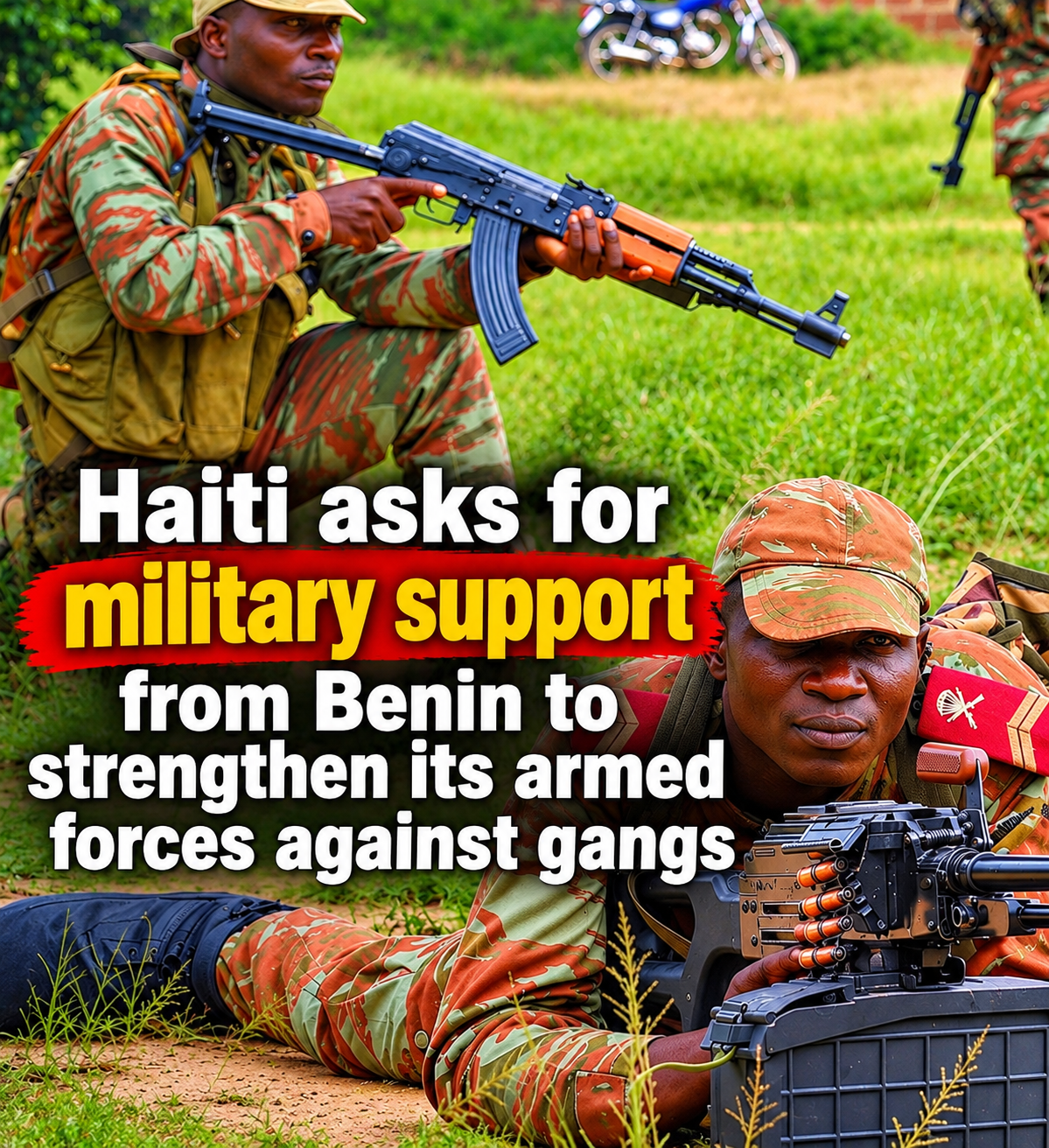
As armed gangs extend their control across key Haitian territories, the crisis has sparked intense debate within Port-au-Prince’s political and military circles. The proposed military cooperation with Benin, while seen as a pragmatic response, has divided public opinion between those advocating for outside expertise and skeptics warning against over-reliance on foreign models. Officials, however, emphasize the urgency of bolstering Haiti’s operational capabilities amid collapsing state authority.
The strategic stakes of Benin’s military cooperation
Haiti’s deepening security vacuum has left its institutions struggling to maintain order. While gangs operate with near-impunity in urban and rural zones alike, the Haitian government is placing renewed focus on military reform not merely through equipment acquisition, but through professionalization and tactical training. Benin’s involvement is framed as a response to this gap, but questions linger over how replicable its counterinsurgency experience is in Haiti’s uniquely fragmented conflict environment.
Military analysts point to Benin’s recent efforts in stabilizing its own northern regions as evidence of viable expertise. However, Haiti’s crisis differs starkly: armed groups there are deeply embedded in communities and wield political influence, complicating any direct transfer of military doctrine. The cooperation’s success may hinge not on imitation, but on adapting shared methodologies to Haiti’s volatile terrain.
Training over equipment: a new model for Southern military alliances
This partnership signals a broader shift in how postcolonial nations address security challenges. Rather than defaulting to Western security providers, Haiti’s approach highlights the potential of intra-African cooperation. Benin’s role could redefine military partnerships across the Global South, proving that regional peers with comparable operational experience can offer relevant solutions in high-stakes conflicts.
The focus on training underscores a growing consensus: durable security requires more than hardware. Strengthening discipline, command structures, and operational coordination is central to rebuilding Haiti’s beleaguered armed forces. Yet critics caution that without robust institutional frameworks, even the most advanced training risks producing hollow capabilities.
Key areas of shared focus
Urban operations: Preparing forces for gang-controlled neighborhoods where conventional tactics fail.
Civil protection: Emphasizing rules of engagement that minimize civilian harm in densely populated zones.
Inter-agency coordination: Aligning military, police, and judicial responses to disrupt gang networks at multiple levels.
Logistical resilience: Adapting training to Haiti’s resource constraints, from fuel shortages to limited medical support.
What’s next for Haiti’s security strategy
The outcome of this partnership will be measured not in statements, but in measurable improvements on the ground. Monitoring will focus on three fronts: enhancements in troop readiness, reductions in gang-related violence in strategically critical areas, and the reinforcement of Haiti’s own institutional capacity to sustain gains.
While Benin’s involvement offers a fresh perspective, analysts warn that no foreign model can substitute for Haiti’s need to reclaim sovereignty over its security agenda. The talks in Cotonou represent a step but the real test lies in translating shared knowledge into tangible control over the streets, ports, and institutions now under gang dominion.
Evaluating the partnership’s long-term impact
A sustainable solution in Haiti demands more than tactical training. It requires a holistic response that bridges military reform with governance, economic revival, and community trust-building. For now, the Benin-Haiti cooperation remains a promising experiment one whose legacy will depend on whether it can curb gang power without replicating the conditions that allowed it to flourish.
By Ousmane Tandja — Journalist